Data Representation & Black Empowerment
The Urgency of Visibility for Black Communities and Beyond
February Reflections: Data, Representation, and the Power of Affirmations
Osiris Booque | February, 2025
Aloha to our incredible community, Sawubona —new and returning members alike! I am so excited to write to you as we close out February, reflecting on the power of data, representation, and the deep connections we are continuing to forge together in this space. Whether you're a long-time reader or just joined us, I welcome you with open arms. This space is for all of us to grow, share, and reflect.
In this blog post, we will explore the following themes:
The importance of data and its personal impact
Mindset, Heartset & Bodyset
The need for data as it relates to Black History Month, Black Futures Month, and International Women's Month
A deep dive into this month’s theme: Affirmations for Permission
My current offering: Flow Into Spring
Closing reflections as we prepare to welcome the coming of warmer months
The Importance of Data: More Than Just Numbers
As we move through the world, we are constantly receiving and collecting data—whether we realize it or not. Data isn't just about the statistics or numbers; it's the collection of information that can shape our understanding of ourselves, our surroundings, and the systems we interact with. But the real power of data lies not in its sheer volume, but in how we choose to integrate it into our lives.
When we talk about data, we're also talking about the way we choose to process and use that data. We can de-clutter, optimize, or redirect it, but these actions depend heavily on the individual who is working with the data. The key is to avoid seeing it as a personal attack or an ego boost. Too often, we react to data—whether it’s a piece of feedback, a result of a personal project, or even something as simple as a social media comment—by taking it personally. But to truly make progress, we must learn to treat data as just that: data.
This is where mindset comes in. How we choose to approach this data—how we choose to use it—determines how it serves us. If we see it as a tool for growth, learning, or optimization, it becomes a powerful ally in our personal development. But if we allow it to dictate our sense of worth, we risk losing the very power data offers.
But mindset is only part of the picture.
In addition to mindset, there are two other critical components that influence how we interact with data—and with ourselves in the process. Let’s talk about Heartset and Bodyset. These are new concepts I’m excited to explore with you, and we’ll dive deeper into them in next month’s newsletter.
Heartset speaks to how we emotionally process the data we receive. It’s about how we feel and respond to what’s happening internally and externally. Heartset isn’t just about being positive; it’s about processing emotions, acknowledging their presence, and letting them inform your actions in a healthy way. When we align heartset with mindset, we open up a full, holistic approach to any challenge, including how we interact with data.
Bodyset is the physical expression of mindset and heartset. It’s how we hold ourselves in the world—how we align our physical posture, our breath, and our actions with the mental and emotional frameworks we are creating. Think of bodyset as the practice of anchoring ourselves in the present moment, allowing our bodies to be in a state of readiness and grounding. This is where yoga therapy and somatic practices play a huge role, helping us integrate what’s happening in the mind and heart into the physical experience of being.
We’ll delve more into these two concepts—heartset and bodyset—in the upcoming months, but I wanted to introduce them now as foundational ground. Now, as we emerge from Black History / Black Futures Month, and move forward into International Women’s Month, the conversation around representation, data, and permission continues to be ever-relevant, ever urgent. For marginalized communities, particularly Black women, femmes, men, and our trans siblings, data is not just a metric or a statistic—it is a matter of life and death.
When we look at the historical narratives that shape our world, we see a consistent pattern…
Black lives, particularly those outside of the mainstream narratives, have often been left out, overlooked, and undervalued. This erasure is not just something that happens in the past—it continues today, in the lack of representation we see in everything from our media to our healthcare systems, our educational institutions to our legal frameworks. The absence of Black people in the data—whether that’s census data, medical data, or employment statistics—creates a deadly silence where our needs, our experiences, and our futures should be.
The Impossibly Projected Core Absence of Blackness
To understand the urgency of this moment, we must recognize that the absence of data on Black people isn’t just a mere oversight or an unfortunate gap. It is a deliberate erasure. From the days of slavery, through Jim Crow, to present-day systemic inequities, the lack of data and representation has been built into the very foundation of the structures that govern our lives. In the absence of data, there is no clear record of our existence. We cease to exist in the eyes of those in power, and this lack of recognition perpetuates a cycle of disenfranchisement.
But we must be clear: this isn’t just about Black people. Blackness is the core of this struggle for representation. It affects Black men, Black women, Black trans and gender-nonconforming people, and anyone whose identity falls within the spectrum of Blackness. When Blackness is absent from the data, it’s not just an academic gap—it’s a social and political gap that has real-world consequences. The effects of this gap are life-threatening. It impacts healthcare outcomes, it shapes the way laws are enforced, and it affects the resources we have access to in our own communities. Without data, we cannot advocate for our rights, we cannot track our progress, and we cannot push for the changes that are so desperately needed.
The Domestic and Intergenerational Toll of Data Erasure
Let us consider what happens when the data is absent, when the records are incomplete, when the reference points are not there for future generations. The toll is immeasurable. Within our own families and communities, the lack of historical records, inspiration, and reference has been a barrier to empowerment. We know that many Black families live in environments where documentation of family histories and personal legacies is sparse—records that other communities take for granted are often missing or incomplete in ours.
This absence of data impacts us in the intergenerational sense. Many of us are disconnected from the stories of our ancestors, unable to access the fullness of their histories and struggles because of systemic efforts to erase us from the record. We don't have the same access to genealogical records, historical resources, or even the stories passed down from generation to generation that others may have in abundance. This isn’t an absence that just sits there—it hurts, and it actively limits our ability to move forward.
In our homes, where the love and wisdom of our elders should be documented, protected, and celebrated, we face a reality where the very stories that could inspire us are harder to find. The research into our collective heritage, our shared triumphs and struggles, is more difficult to access—often due to the historical disregard for Black lives. Without these records, without the references that link us to those who came before us, we are forced to navigate life without the power of our full legacy.
This is why data is so much more than just numbers. Data is about remembering. It's about living. It’s about seeing Black people—not just in the present moment, but across generations. It’s about ensuring that our legacies, our identities, and our futures are not erased from the data, from the world’s collective consciousness.

Representation is a Fight for Survival
The need for Black people to have representation in the data is not just a theoretical debate; it’s a matter of survival. It’s a fight for our lives and our futures. When Black people are not counted in data, when our voices are not heard, when our bodies are not seen, the world forgets us. The systems we engage with—the police, the healthcare providers, the schools, the government—make decisions without our presence in their calculations. We are then left to pick up the pieces of the system that was never designed to support us.
Consider the disparities in healthcare for Black people, which are often exacerbated by the lack of data tracking. Without the proper representation in medical data, our health is treated as an afterthought. We know that Black women are more likely to die in childbirth, that Black men suffer higher rates of heart disease and diabetes, that Black trans people experience disproportionate violence. But without data that clearly reflects these disparities, it is impossible to push for the resources and interventions we need to save lives.
My needs as a Black man along with the needs of Black women, Black trans, and gender-nonconforming people cannot be met if we do not have the data that speaks to our distinct experiences. For Black people, the fight for data representation is not just about fairness—it’s about survival.
This is where the words of Huey P. Newton resonate deeply. He understood the necessity of visibility, the critical importance of ensuring that Black people had a place in the collective record. He fought for the right of Black people to be seen—not just in the streets, but in the data, in the history books, in the law. He understood that without our representation in these places, we would continue to be overlooked, ignored, and subjected to a system that had no investment in our survival.
As we move into International Women’s Month and continue to reflect on Black Futures, let us remember: the struggle for representation is not just a cultural or political issue—it is a matter of life or death for our people. Black futures depend on data. Black futures depend on visibility. Black futures depend on the permission we give ourselves to be counted, to be seen, and to demand our place in the world.
The Role of Data in the Liberation of Black People
As we continue the fight for Black liberation, representation in data is a core aspect of this struggle. The erasure of Black voices from the data is a continuation of a long history of exclusion, and we cannot afford to allow this silence to persist. To change the trajectory of our future, to ensure that Black lives truly matter, we must demand our presence in the data. It is not just about numbers—it’s about ensuring that the full scope of our existence, our contributions, and our struggles are seen, heard, and honored.
This is not just a fight for today—it is a fight for the generations to come. A fight to reclaim our histories, our identities, and our futures. Blackness has always been at the heart of this struggle, and as we continue to push for data, representation, and visibility, we are not just advocating for ourselves—we are advocating for the generations who will follow in our footsteps. Our survival depends on it.
Affirmations for Permission
This month’s theme is Affirmations for Permission, and it couldn’t be more timely as we explore the power of data and representation. To truly optimize our lives, we need to give ourselves permission—to choose how we respond to data, to choose how we define ourselves in the face of feedback, and to choose the direction of our own growth.
For many, affirmations are a powerful tool for empowerment, but they are even more transformative when we learn to affirm our own permission—the permission to show up fully, to embrace who we are, and to make decisions that align with our values and goals. This practice of permission is deeply connected to both our individual journeys and the collective fight for justice and representation. Just as data must be allowed to flow freely to show the reality of our experiences, we must also give ourselves the affirmative permission to exist fully in this space.
I give myself permission to grow, to evolve, and to honor the data of my journey.

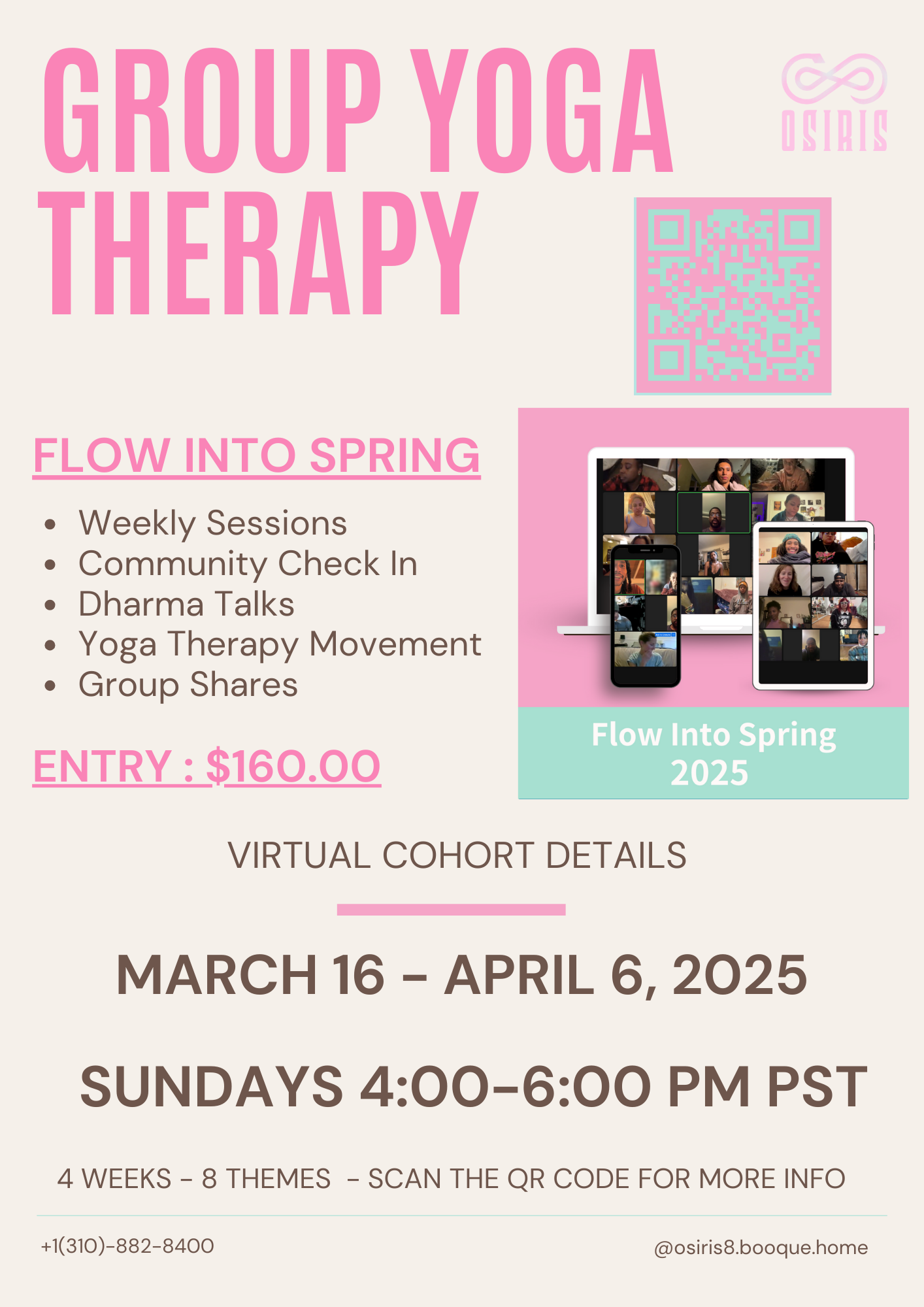
Flow Into Spring, Group Yoga Therapy
Now, as we transition into the coming season of Spring, I’m thrilled to announce Flow Into Spring, a new 4-week offering designed to help us deepen our connection to the blooming and blossoming of the season. Starting on March 16, I’ll be guiding a small, intimate group through transformative yoga therapy sessions to cultivate the energy of renewal, growth, and inner clarity.
Flow Into Spring will be held over four weeks and is priced at just $160 for the entire series. This offering is perfect for those who want to tap into the rejuvenating energy of the season, release what no longer serves them, and open themselves to the opportunities Spring offers. Join me and a small group of dedicated individuals ready to connect more deeply with their body, mind, and spirit.
This is a limited offering, so make sure to sign up soon—spaces are limited!
Ready for the Spring, and Excited to Continue with You
As we wrap up this month and move into the final weeks of cold, I reflect on how much we’ve already accomplished in 2025. From the conversations we’ve had around data, representation, and permission, I’m grateful for the space we’re building together here.
Thank you for being part of this community, whether you’re reading your first post or you’ve been following for months. I am excited to continue this journey with you as we embrace the changing seasons, deepen our work together, and continue to support each other in our personal and collective growth.
I’m deeply honored to hold this space for you, and I look forward to the coming months of connection, transformation, and springtime renewal.
With gratitude and exsssssitement,
Osiris Booque ✨🐍
Now Enrolling
Flow Into Spring
An 8-week yoga therapy intensive with Osiris Booque, C-IAYT. Four live sessions exploring awareness, choice, truth, and action through Phoenix Rising methodology.
Sundays, March 22 – May 3 · 10 AM – 12 PM PST · 100% Virtual